

- Home
- Kilas Global
- Boots on the Ground. The Tungsten System That Was Never Drilled Is About to Be
Minggu, 16 Agustus 2026 08:15:00
Boots on the Ground. The Tungsten System That Was Never Drilled Is About to Be

News provided by Equity-Insider.com on behalf of Western Star Resources Inc.
A past-producing New Mexico tungsten skarn that once attracted U.S. Government funding for underground drilling -- funding that was never deployed -- is finally getting the systematic modern exploration it was promised in the 1950s. Dahrouge Geological Consulting is on the ground. The field program targets completion by August 31.
VANCOUVER, British Columbia, Aug. 14, 2026 (GLOBE NEWSWIRE) -- Equity-Insider.com News Commentary - In critical minerals exploration, the most overlooked assets are often not the ones that have never been found, but the ones that were found, partially explored, and then abandoned when commodity prices made further work economically marginal. Eagle Point is that kind of asset.
The tungsten skarn in Hidalgo County, New Mexico produced approximately 1,800 tons of scheelite-bearing material grading approximately 0.52% WO3 during 1943 and 1944. Subsequent U.S. Government geological work outlined what historical examiners estimated as a mineralized system on the order of approximately 170,000 tons. That work was compelling enough that the U.S.
Government entered into a Defense Minerals Exploration Administration agreement to fund 75% of a proposed shaft-sinking and diamond-drilling program. That program was never executed.
The drilling was never done. The system has sat largely untested by modern exploration methods for more than seventy years while the economics of domestic tungsten supply were irrelevant. They are no longer irrelevant. On August 11, 2026, Western Star Resources announced the commencement of Eagle Point's maiden field exploration program, with Dahrouge Geological Consulting on site to deliver the systematic geological validation that every drill program needs before a single hole is turned.
Companies mentioned: Western Star Resources Inc. (CSE: WSR) (OTC: WSRIF) (FRA: 4K2), MP Materials Corp. (NYSE: MP), Perpetua Resources Corp. (NASDAQ: PPTA) (TSX: PPTA), NioCorp Developments Ltd. (NASDAQ: NB) (TSX: NB), Comstock Inc. (NYSE American: LODE)
Key Takeaways
Maiden field program commenced at Eagle Point, Hidalgo County, New Mexico. Dahrouge Geological Consulting is on site executing detailed geological and structural mapping, channel and grab sampling, drill-collar ground truthing, and field evaluation of areas surrounding proposed drilling targets.
Program targeting completion by August 31, 2026, with a field summary and assessment report from Dahrouge to follow. Results will be integrated with the Eagle Point geological database to refine drill targets for the planned maiden drilling program.
Eight skarn bodies exposed at surface across a mineralized corridor extending approximately 1,500 to 2,000 feet along the prospective limestone-granitic intrusive contact. Historical drilling was limited to shallow holes concentrated around the main open-cut area -- the system remains largely untested at depth and along strike.
USGS/NMBGMR sampling previously returned a selective composite skarn outcrop sample grading 27.6% WO3 and 0.98% molybdenum. These results are selective in nature and not representative of average mineralization across the property.
The U.S. Government's 1950s DMEA agreement to fund 75% of underground development and drilling at Eagle Point was never executed. Western Star's maiden field program is the first systematic modern exploration ever completed at the property.
What Dahrouge Is Actually Doing
The field program Dahrouge is executing at Eagle Point is not glamorous. It does not involve drilling, grade announcements, or resource estimates. What it involves is the unglamorous but essential foundation work without which drilling is guesswork: understanding where the geology actually is, how the structures actually trend, and whether the proposed drill-hole collar locations are actually positioned to test the targets they are supposed to test.
The program scope includes detailed geological and structural mapping, with strike-and-dip measurements and digital field mapping across the eight exposed skarn bodies and the broader prospective contact zone. Systematic channel and grab sampling, with samples documented, photographed, uniquely identified and submitted to ALS Tucson for analysis. Validation of existing historical project data -- critical work when dealing with records from the 1940s and 1950s that may be incomplete, inconsistently described, or referenced to survey datums that no longer match modern GPS coordinates. Ground-truthing of proposed drill-hole collar locations to confirm they are physically accessible and geologically positioned where the geological model predicts they should be. And field evaluation of areas surrounding the proposed drilling targets specifically to identify opportunities to expand the exploration target areas -- looking for additional skarn bodies, structural intersections, or alteration zones that historical work may have missed or not fully followed up.
The integration step matters as much as the field collection. All of the new mapping, sampling, and structural measurements will be integrated with the existing Eagle Point geological database to produce a refined drill-targeting model. That model is what Dahrouge's post-program field summary and assessment report will describe, and it is the document that will guide where the drill bit goes when the maiden drilling program commences.
"This is the program we have been eager to commence since acquiring Eagle Point. We are moving from historical records and exceptional surface indications to boots on the ground, systematic modern exploration and the identification and validation of drill locations," said Blake Morgan, President and CEO of Western Star Resources. "What excites us most, however, is what has not been done. The U.S. Government previously agreed to support a drilling program at Eagle Point, yet that program was never completed, and the system has never been comprehensively tested using modern exploration techniques."
The Geological Architecture: A Skarn System Built for Discovery
Eagle Point's geology is the kind that experienced tungsten explorers find compelling. The mineralization occurs within a contact-metamorphic skarn system developed along the limestone-granitic intrusive contact -- the geological setting that hosts the majority of the world's significant tungsten skarn deposits. Scheelite, the calcium tungstate mineral that is the principal ore mineral at Eagle Point, preferentially precipitates at the limestone-intrusive contact as hydrothermal fluids interact with the carbonate host rock. The lateral and vertical extent of that contact defines the theoretical maximum footprint of the mineralized system.
Historical mapping identified individual tactite bodies extending up to approximately 140 feet in length and approximately 30 feet in width, within a mineralized geological setting extending approximately 1,500 to 2,000 feet along the prospective contact. Eight separate skarn and tactite bodies were exposed through an open cut, trenches, and bulldozer cuts. That surface exposure is extensive. But the historical drilling was limited to shallow holes concentrated around the main open-cut area. Everything below the historical workings, everything along strike from the known bodies, and everything in the areas between the eight mapped skarn bodies remains untested by modern analytical methods.
The 27.6% WO3 result from USGS/NMBGMR sampling -- a selective composite skarn outcrop sample that is not representative of average grades across the property -- is nonetheless a meaningful geological indicator. Scheelite occurring at those concentrations at surface indicates the presence of a productive tungsten-mineralizing system. It does not tell you how large that system is or how continuous the mineralization is at depth. That is precisely what the field program and subsequent drilling are designed to determine.
The Three-Asset Nevada-New Mexico Platform
Eagle Point sits alongside two Nevada tungsten projects in Western Star's U.S. portfolio: the Rowland Tungsten Property, expanded by approximately 170% since acquisition with more than 17 historical workings identified, and the White Star Tungsten Project, which forms an adjoining district-scale exploration position creating an approximately six-kilometre prospective exploration corridor across the Nevada position. Each of the three projects is a past-producing tungsten system in an established U.S. mining jurisdiction. Each has received modern systematic exploration since Western Star's acquisition. And each remains largely untested at depth and along strike by modern methods.
Western Star's strategy across all three assets follows the same three-stage logic: acquire assets with historical production and geological validation in place; apply modern geophysics, geochemistry, mapping, and geological modelling to define and prioritize drill targets; and drill the highest-priority targets systematically to test for resource definition and expansion potential. Eagle Point's maiden field program is the second stage of that process at the New Mexico asset, with drilling as the third stage pending permitting, technical review, and financing. At Rowland in Nevada, drill permitting is underway and a one-kilometre tungsten-skarn geochemical corridor with a peak soil result of approximately 1,425 ppm WO3 has already been defined. The three assets are at different points in the same pipeline, providing the company with multiple upcoming catalysts across two states.
The U.S. Critical Minerals Names Investors Are Watching
MP Materials Corp. (NYSE: MP)
MP Materials is the operating anchor of the U.S. domestic critical minerals supply chain and the most important benchmark for understanding what it looks like when the market fully prices a company that supplies strategic materials from U.S. soil. The company operates the Mountain Pass Rare Earth Mine and Processing Facility in California -- the only rare earth mining and processing operation of scale in the Western Hemisphere -- and is advancing an integrated magnet manufacturing facility in Fort Worth, Texas, designed to produce neodymium-iron-boron magnets for electric vehicles, defense applications, and other critical end uses entirely from U.S. materials. In Q2 2026, MP Materials reported revenue of approximately $78 million, with REO production of 13,225 metric tonnes and NdPr production of 1,622 metric tonnes. The U.S. Department of Defense has provided direct financial support to MP Materials through strategic contracts that reflect the government's recognition that a functioning domestic rare earth supply chain is a national security priority. The parallel between MP Materials' positioning in rare earths and Western Star's ambition in tungsten is direct: both are pursuing the establishment of domestic U.S. supply for a critical mineral where dependence on Chinese production creates unacceptable strategic risk. MP's market capitalization and institutional support illustrate the scale of value the market assigns to that thesis when execution is credible.
Perpetua Resources Corp. (NASDAQ: PPTA) (TSX: PPTA)
Perpetua Resources is the most directly analogous U.S. domestic critical minerals development story to Western Star's tungsten thesis. Its Stibnite Gold Project in central Idaho is the only gold-antimony development project in the Western world to have received the level of sovereign-backed financing that reflects the full weight of the critical minerals supply security problem: in May 2026, the U.S. Export-Import Bank approved a US$2.9 billion senior secured loan under the Make More in America Initiative to fully fund the project's development. Stibnite hosts a 15-year mine plan with 4.22 million ounces of gold and 106 million pounds of antimony -- the latter being, like tungsten, a strategic mineral formally classified as critical by the U.S. government and subject to Chinese export controls that have dramatically tightened Western supply. The scale of the U.S. government's financial commitment to a domestic antimony source is the most direct available evidence of how seriously the federal government is treating critical mineral supply security. Western Star's submission of an application in response to a U.S. Defense Industrial Base Consortium solicitation for reliable supplies of strategic critical minerals is a smaller step along the same pathway that Perpetua has been walking toward EXIM Bank approval, and Perpetua's outcome illustrates the destination that credible domestic critical mineral developers can reach.
NioCorp Developments Ltd. (NASDAQ: NB) (TSX: NB)
NioCorp Developments is a U.S.-focused critical minerals developer advancing the Elk Creek Project in Nebraska, which would produce niobium, scandium, and titanium -- all formally designated as critical minerals by the United States -- from an underground carbonatite-hosted deposit. The company has been pursuing U.S. government financing for project development through multiple channels, including engagement with the Export-Import Bank and the Department of Defense, and has structured its corporate strategy around the explicit thesis that domestic production of defense-critical materials qualifies for the kind of sovereign-backed support that commodity economics alone cannot justify. NioCorp's engagement with government stakeholders, its project development approach, and its dual NASDAQ and TSX listing are structural parallels to the positioning Western Star is establishing with its own DIBC application and U.S.-focused portfolio. The company illustrates both the pathway that U.S. critical minerals juniors can follow toward government validation and the capital markets access that dual-listed critical minerals stories can achieve when the strategic thesis is credibly articulated.
Comstock Inc. (NYSE American: LODE)
Comstock Inc. is a Nevada-based company whose evolution from a historic silver and gold district operator into a critical minerals and advanced materials platform provides the most instructive regional precedent for the kind of strategic repositioning that domestic critical minerals supply security is enabling in the American West. The company's assets and technology development programs are centered in Nevada's Comstock Mining District, one of the most historically significant mineral districts in the United States, and span mercury remediation and reclamation, sustainable fuels, and critical minerals recovery from legacy and primary sources. Comstock's trajectory -- applying modern technology and strategic positioning to historically productive U.S. mineral systems in an era when domestic supply chains are receiving unprecedented government and investor attention -- is the broad archetype of the development model that Western Star is applying to its past-producing tungsten assets in Nevada and New Mexico. These companies are referenced to illustrate the sector only and do not imply any partnership, endorsement, affiliation, or comparable financial performance.
What to Watch
The immediate catalyst is the completion of the Eagle Point field program by August 31, 2026, and Dahrouge's subsequent field summary and assessment report. That report will contain the geological and structural data that defines the drill-targeting model for the planned maiden drilling program. The key outputs to watch for in the report are the structural orientation of the skarn bodies and their interpreted continuity along strike and at depth, the results of systematic channel and grab sampling across the eight exposed skarn bodies and the broader contact zone, and the identification of any additional target areas that field evaluation has revealed beyond the historically defined zones.
Following the report, the critical path moves to drilling: specifically, the permitting, final program design, contractor selection, and financing required to execute the maiden drill program. Western Star has been explicit that the 2026 objective is to commence drilling at Eagle Point, and Dahrouge's field program is the last systematic preparation step before the drill-permitting process can be finalized. Any announcement of drilling commencement at Eagle Point would represent the most significant geological milestone in the company's history and the first direct test of a system that the U.S. Government once committed to fund and then never drilled.
Investors tracking Western Star's Nevada position should also watch for updates on Rowland, where drill permitting is underway following the definition of the one-kilometre geochemical corridor, and for any news on the outcome of the DIBC application that could provide government-level validation of the company's domestic tungsten supply thesis.
CONTINUED... Learn more about Western Star Resources Inc. at: https://www.westernstarresources.com
Track the Signals Before the Crowd
The best positioning happens before the crowd catches on. Eagle Eye is a real-time investor signal-intelligence platform that surfaces sentiment shifts, news flow, and trending tickers as they form, so you see attention building instead of chasing it. Watch it live at eagle-eye.dev.
Contact
http://Equity-Insider.com | info@equity-insider.com
Copyright 2026 GlobeNewswire, Inc.
Share
Komentar
Terkini

Kilas Global 6 jam lalu
Brother "Managed Print Service" Enables Businesses to Reduce Operating Costs and Enhance Efficiency with Flexible Deployment
HONG KONG SAR - Media OutReach Newswire - 5 October 2026 - Amid rising operating costs and accelerating digital transformation, many small and medium-sized enterprises (SMEs)

Kilas Global 6 jam lalu
Dr Maye Musk, author, supermodel, and dietitian, speaks at the Prudential Leadership Forum
HONG KONG SAR - Media OutReach Newswire - 4 October 2026 - Prudential Hong Kong Limited ("Prudential") welcomed Dr Maye Musk, a globally renowned author, supermodel and dietitian, to the Prudential Leadership Forum
Kilas Global 6 jam lalu
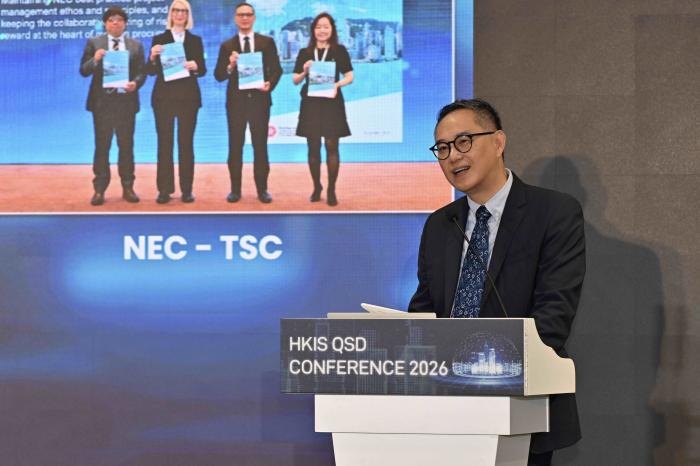
HKIS - Quantity Surveying Division Conference 2026
Transforming QS Practice in a New Era: Integrating Digital Construction, Collaborative Contracting and Payment Security
HONG KONG, CHINA - Media OutReach Newswire - 3 October 2026 - The Hong Kong Institute of Surveyors (HKIS)

Kilas Global 6 jam lalu
Chinese media praises Shanghai Electric's latest Malaysian project: a step forward for China's high-end power equipment in overseas markets
SHANGHAI, CHINA - Media OutReach Newswire - 3 October 2026 - China News Service (CNS) praises Shanghai Electric's recent contract for Unit 3 of the Samalaju Combined Cycle Gas Turbine (CCGT) Project in Sarawak, Malaysia
Kilas Global 8 jam lalu
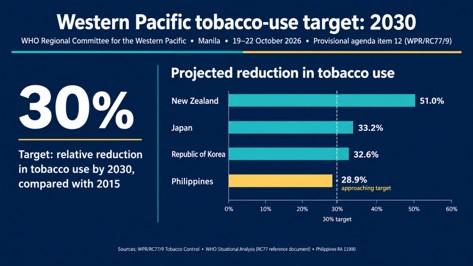
CAPHRA Questions Why WHO Overlooks Its Tobacco-Control Success Stories
MANILA, Philippines, Oct. 05, 2026 (GLOBE NEWSWIRE) -- Whilst New Zealand is on track to cut tobacco use faster than any other country in the Western Pacific, according to the World Health Organization's own figures
Kilas Global 8 jam lalu
Industrial Water Action Workshop (Lokakarya Aksi Air Industri) yang bekerja sama dengan Nike, Buka Pendaftaran
JAKARTA, Indonesia, Oct. 03, 2026 (GLOBE NEWSWIRE) -- Global Water Intelligence (GWI) dan Corporate Water Leaders (CWL) akan menyelenggarakan Industrial Water Action Workshop pada tanggal 16-18 November 2026 di Jakarta, Indonesia.

Kilas Global 2 hari lalu
Huawei Highlights Continuous Innovation, Securing Competitive Edge Through Technological Breakthroughs
SHENZHEN, CHINA - Media OutReach Newswire - 3 October 2026 - Huawei hosted an international media roundtable today featuring Richard Yu, Executive Director,

Kilas Global 2 hari lalu
Henley & Partners - Argentina Announces New Citizenship by Investment Program
LONDON, Oct. 02, 2026 (GLOBE NEWSWIRE) -- Argentina has unveiled the details of its new Citizenship by Investment Program, marking a significant development in Latin America's evolving residence and citizenship planning landscape.
Kilas Global 2 hari lalu
Industrial Water Action Workshop in partnership with Nike: Apply to Attend
JAKARTA, Indonesia, Oct. 02, 2026 (GLOBE NEWSWIRE) -- Global Water Intelligence (GWI) and Corporate Water Leaders (CWL) will convene the Industrial Water Action Workshop from 16-18th November 2026 in Jakarta, Indonesia.

Kilas Global 2 hari lalu
YYForce Mengoperasikan Robot Layanan Perhotelan di Aloft by Marriott Langkawi Pantai Tengah, Malaysia
SINGAPURA, Oct. 02, 2026 (GLOBE NEWSWIRE) -- YYFORCE Inc. (NASDAQ: YFOR) ("YYFORCE" atau "Perusahaan"), penyedia solusi tenaga kerja berbasis teknologi dan layanan manajemen fasilitas terintegrasi
Terpopuler
1
Kilas Global 5 hari lalu
Green GSM Officially Launches All-Electric Taxi Service In Northern Mindanao, Philippines
2
Kilas Global 5 hari lalu
Wood Mackenzie: Europe's Power Sector Hits 80% Zero-Carbon Generation by 2030, But Misses Its Own Renewables Target
3
Kilas Global 5 hari lalu
EBC Live Trader Cup Indonesia Resmi Dimulai di Tengah Periode NFP dan FOMC
4
Kilas Global 5 hari lalu
52% of business travelers prioritize security when companies provide their connection, according to Holafly for Business
5
Kilas Global 4 hari lalu
HKTB Launches Inaugural "Hong Kong Halloween Month" to Stage Hong Kong's Biggest Cosplay Street Party
6
Kilas Global 4 hari lalu
Italpreziosi Official Sponsor of the Gala Dinner at the LBMA & LPPM Global Precious Metals Conference 2026
7
Kilas Global 3 hari lalu
TAPI (Technology & API Services) Names Serge Rogasik CEO to lead next chapter of growth and competitiveness
8
Kilas Global 3 hari lalu
Boehringer Ingelheim's survodutide achieves up to 13.1% weight loss in new Phase III trial, alongside significant improvements in glycemic control in people with obesity and type 2 diabetes
9
Kilas Global 3 hari lalu
Huawei Launches the HUAWEI Mate 90 Series, Equipped with the Flagship Tau Chipset Across the Entire Series
10