
- Home
- Kilas Global
- "The Heart of Revolution": "Open Banking" Brings Financial Empowerment to Society

Selasa, 30 Juli 2019 17:42:00
"The Heart of Revolution": "Open Banking" Brings Financial Empowerment to Society

HONG KONG, - 30 July 2019 - As innovation of financial technologies and transformation of banking operations continue to gather pace since 2018, the time is ripe for "Bank 3.0", meaning digitised, smart and open.
Some article claimed that 2018 was the first year of Open Banking era, and assumed that Open Banking would fundamentally alter the business, marketing, risk control and operation models of commercial banks, to extend their service boundaries, and ultimately change their growing curves. The banking industry would take this opportunity to undergo a revolution.
In July 2018, a IDC survey of 146 Asia-Pacific banks showed that 7/10 banks see Open Banking increasing their customer reach, and 4/10 of these see alternate direct/ indirect revenue streams in Open Banking. In view of less than 10% of banks today can claim to be "innovators", it has the potential to level the playing field among banks. The survey estimated that majority of banks are expected to ramp up their capabilities in terms of Open Banking between 2018 and 2020.
As Open Banking is gradually becoming a norm globally, majority of retail banks express the willingness to 'embrace' it. More and more positive attitude is attributed to the situations of different markets throughout the world, in which represented by the UK and the EU that the banks are more specifically to satisfy regulatory requirements, whereas in which represented by South East Asia and China, most of those are initiated by financial-technology innovation and driven by the market itself.
So, what exactly is "Open Banking"?
The concept of "Open Banking" originates in the U.K., along with similar concepts such as borderless banking and Open Platform Banking. Open Banking, through the merging of third-party data, algorithms, businesses and work-flow processes, succeeds in transforming into a business-driven application structure, and upgrading the entire system from front- to- back- office to be resigned to banking platform with that of third-party vendors. It is driven by customers' needs, making use of technologies like API/SDK as the means, and eco-system scenarios as the basis of application to provide customised services and achieve data commercialisation.
Opportunities for accelerating Open Banking in Hong Kong and Taiwan
There is a mode for the Open Banking development. In the U.K., Open Banking is a trend or concept that arises from regulatory needs. To put it another way, the regulators proactively issue guidelines or decrees to oblige traditional banks and financial institutions to share customer information for free or for a fee. In Hong Kong and Taiwan, Open Banking is also driven by laws or regulations.
In Hong Kong, "Open Banking" is raging. At this moment, Hong Kong's regulators are employing a wait-and-see approach with the hope that it will allow both players in private and public sector to form a rhythm and work out any potential hurdles before the Open Banking wave crests.
In July 2018, Hong Kong Monetary Authority issued a revised API framework for Open Banking. The framework would be implemented in four phases and was aimed at encouraging provision of innovative, general services to enhance customer experience using technology.
As at the end of January 2019, the first phase involving publication of banking retail product information including that on credit loans, credit cards and wealth management, was completed. Phase Two involving account-opening using third-party service providers' apps would be implemented by the end of October this year.
The third phase involves accessing customer account information and the fourth phase involves making payment and transfers transactions. The time frame for the last two phases would depend on the progress of the previous two phases.
Financial Supervisory Commission (FSC) in Taiwan has adopted Hong Kong's mode, which is promoted by banks and third-party service providers(TSP). Open Banking is to be achieved through three stages. The first stage of openness aims at the banks' commodity information, such as credit card, fund, mortgage interest rate and other public information. The second one is to open customers' information by obtaining their authorisation. Meanwhile, TSP can provide account integration services. And the last but not the least one is to open information for trade.
The FSC instructs local Bank Association to study the scope and self-regulation of cooperation with TSP and the financial institutions are responsible for formulating common API standards, including technology and information security standards. The Global Research & Industry Alliance under National Chengchi University is responsible for reviewing financial institutions' files in the aspects of technology and information security. It also acts as a platform for Open API verification and testing, and consolidates the views of TSPs for reference. (*).

Philippines' Day One Champions Shine at ACES Awards 2026

FAWCAR Officially Enters the Italian Market with Five SUVs
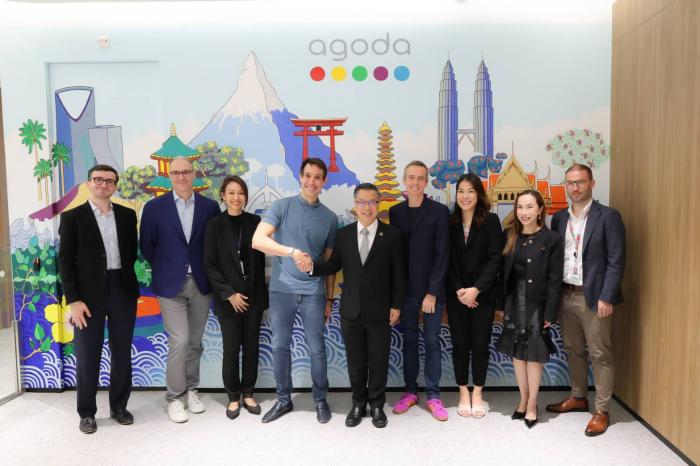
Agoda Makes Bangkok Its Largest Office Worldwide, with More Than 4,500 Staff
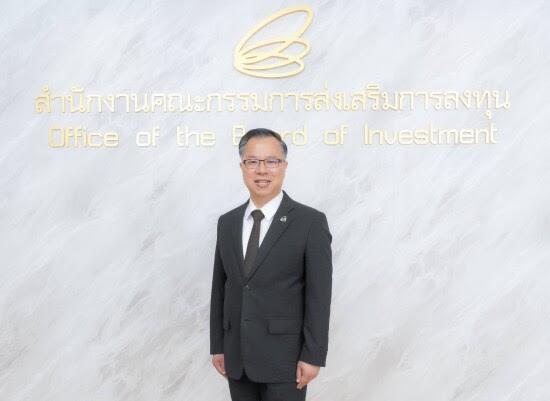
AI and EV Boom Draws $690 Million in Advanced Materials Investment Plans to Thailand

Louis Vuitton's Art of Travel pulls into the station at Louis Vuitton Central Station - the Landmark pop-up in Hong Kong

Vietnam's healthcare spending forecast to reach US$34.1 billion: the technology adoption challenge

Guardian and Mannings launch Clera Cera, a dermatologist skincare range made for Asian skin

Qashier Launches QashierGM, an AI General Manager That Works With the Whole Team
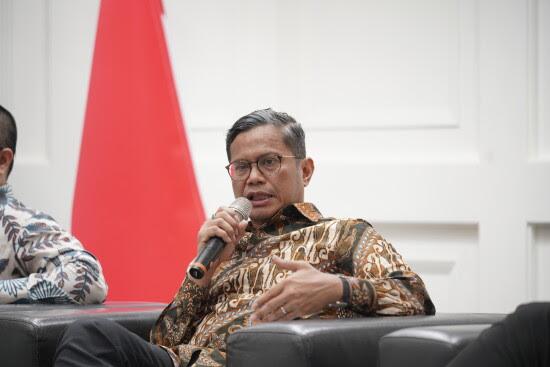
New Asia Forum 2026 Targets US$30 Billion in Investment Mobilization, Positions Indonesia as a Gateway to Asia's Growth