
- Home
- Kilas Global
- CUHK Business School Research Reveals U.S. Firms Not Coming Home Amid Trump's Trade War

Jumat, 21 Februari 2020 07:47:00
CUHK Business School Research Reveals U.S. Firms Not Coming Home Amid Trump's Trade War

HONG KONG, - 20 February 2020 - The foundation of the current U.S. administration was President Donald Trump's vision of "Make America Great Again" and his promise to bring jobs back to the U.S. From the tariffs on US$550 billion of Chinese goods to tax cuts, President Trump was confident that his economic initiatives could bring investment and manufacturing back home.
However, a recent research study by The Chinese University of Hong Kong (CUHK) Business School revealed that things did not actually go President Trump's way.
Entitled "Not Coming Home: Trade and Economic Policy Uncertainty in American Supply Chain Networks", the study was conducted by Prof. Jing Wu, Assistant Professor of Department of Decision Sciences and Managerial Economics at CUHK Business School, PhD student Miaozhe Han and Prof. Ben Charoenwong, Assistant Professor of Finance at the National University of Singapore Business School.
President Trump imposed tariffs on China in the first quarter of 2018, kick-starting what is now called the 'U.S.-China Trade War', which has since escalated. A phase-one deal was signed in January putting a pause to the trade dispute. "But even before the start of the trade war, President Trump sent a myriad of mixed messages on whether trade deals would be made, flipflopping from hawkish and dovish statements," said Prof. Wu. Although existing academic research and policy discussions focus on the effect of tariffs on global value chains, there were few empirical studies of the effect of the uncertainty surrounding trade and other economic policy on production decisions.
On one hand, risk averse firms may try to diversify some uncertainty by establishing back up suppliers and customers. On the other hand, such uncertainty may disincentivise investments abroad and induce firms to bring their production networks home where they are more familiar, he said.
The researchers studied the relationship between different types of economic policy uncertainty and firm global value chains. Prof. Wu and his collaborators specifically considered three types of uncertainty: American trade policy uncertainty created by the imposition of tariffs, duties, import barriers as well as government subsidies; American nontrade economic policy uncertainty from changes such as to tax codes and monetary and fiscal policies; and economic policy uncertainty from measures that target a specific foreign country. They aimed to find out if an increase in trade uncertainty would actually move a firm's production network home. (*).

The "Cool Hainan" Global Campaign Generates Buzz and Attracts International Travelers
A City of Innovation and Openness: Hohhot's Answer to Integrated Development
ATFX World Trading Cup Gains Momentum as Traders Worldwide Compete for USD 210,000
Dusit brings ASAI Hotels to Malaysia with the opening of ASAI Gamuda Cove - the brand's largest property to date

Chubb appoints Jon Longmore as Country President of New Zealand
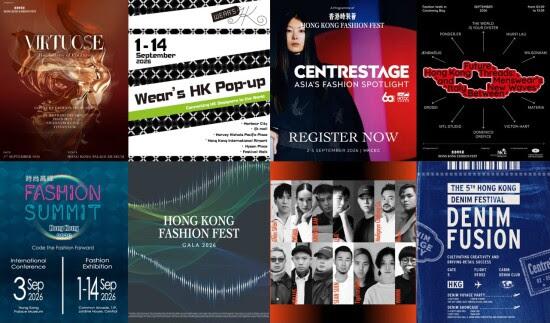
Hong Kong Fashion Fest presents eight flagship programmes for its third edition
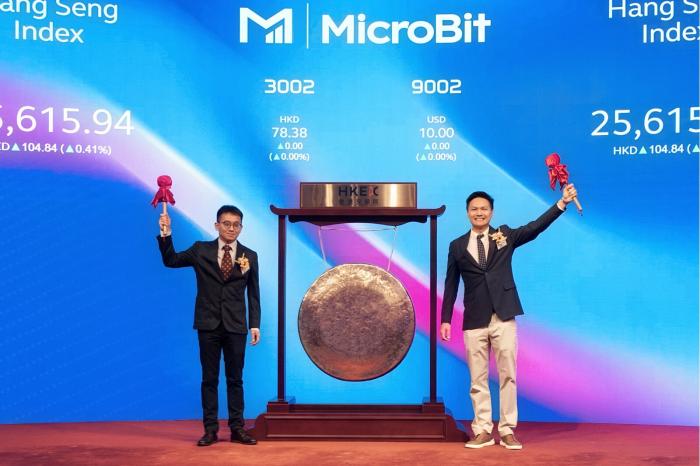
MicroBit Launches Hong Kong's First Bitcoin and Gold ETF on HKEX Today
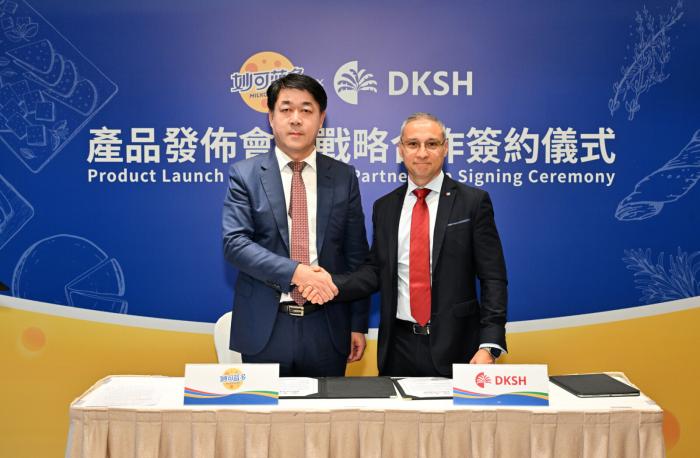
Milkground and DKSH Hong Kong Announce Strategic Partnership to Bring Cheese Products to Hong Kong

FGA Trust Establishes Tokyo Representative Office to Support Japan-Hong Kong Cross-Border Trust Enquiries