

- Home
- Kilas Global
- National Center on Education and the Economy (NCEE) Announces the Global "Rapid Risers" in Education
Rabu, 22 April 2026 07:58:00
National Center on Education and the Economy (NCEE) Announces the Global "Rapid Risers" in Education
Georgia, Macao, Oman, Peru, and Qatar identified as Global Rapid Risers, demonstrating how systems can accelerate progress and sustain gains over time. NCEE invites leaders worldwide to learn from these systems as they design pathways to excellence.
WASHINGTON, D.C., April 21, 2026 (GLOBE NEWSWIRE) -- The National Center on Education and the Economy (NCEE) today announced Georgia, Macao, Oman, Peru, and Qatar as its 2026 Global Rapid Risers. These five systems demonstrate that jurisdictions can improve quickly, and sustain that improvement, through thoughtful, intentional system change. NCEE invites leaders worldwide to learn from these systems who are showing real gains in improving student learning for all students.
This marks the second installment in NCEE's 2026 global benchmarking series, following its analysis of the world's highest-performing systems: Canada, Denmark, Estonia, Finland, Hong Kong, Ireland, Japan, Korea, Singapore, and Sweden. While that analysis highlights where excellence has been achieved and maintained, the Rapid Risers analysis focuses on how systems move-revealing what it takes to build momentum, expand opportunity, and sustain progress.
Each of the five Rapid Risers has delivered broad academic gains over the past decade and maintained those gains through the disruption of the global pandemic. Together, they offer a clear signal: meaningful improvement is not accidental. It is the result of deliberate choices, sustained focus, and increasingly coherent system design.
"High-performing systems show us what is possible," said Vicki Phillips, CEO of NCEE. "Rapid Risers shows us how it happens. These systems are making disciplined choices about how they align policy, practice, and resources-and in doing so, they are accelerating progress in ways that are both measurable and durable."
To be identified as a Rapid Riser, systems met rigorous criteria for both growth and resilience:
Placed among the top ten in rate of improvement across reading, math, and science over multiple cycles of international assessments, including Programme for International Student Assessment (PISA), Progress in International Reading Literacy Study (PIRLS), and/or Trends in International Mathematics and Science Study (TIMSS), leading up to 2019.
Sustained those gains in at least two core subjects through and beyond the pandemic period.
"Rapid improvement at scale requires more than isolated reforms," said Tracey Burns, Chief of Global Strategy and Research at NCEE. "These systems are strengthening coherence across their education architecture-connecting what they expect of learners with how they support educators, allocate resources, and measure progress. That alignment is what allows gains to take hold and endure."
The Rapid Risers reinforce a central insight from NCEE's global research: There is no fixed starting point for improvement. Systems at different stages of performance can make meaningful progress when they commit to a clear direction and design for it over time.
About the National Center on Education and the Economy (NCEE)
NCEE is a global think-and-do tank at the intersection of education and the economy. We conduct deep research to discover the best ideas from the world's highest performing education systems. We design strategies for states and districts based on the global research that informs policy and improves practice. We deliver world-class leadership development through NISL NEXT.
Jenni Craw
National Center on Education and the Economy
202-379-1800
jcraw@ncee.org
Copyright 2026 GlobeNewswire, Inc.
Share
Komentar
Terkini
Kilas Global 9 jam lalu
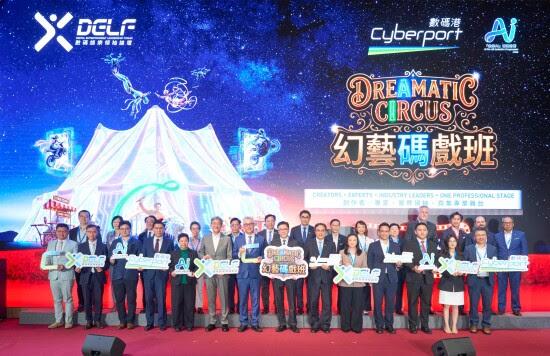
"Digital Entertainment Leadership Forum 2026" Opens Today
HONG KONG SAR - Media OutReach Newswire - 28 August 2026 - Cyberport's annual flagship event, the "Digital Entertainment Leadership Forum 2026" (DELF 2026), opened today at Cyberport.
Kilas Global 10 jam lalu
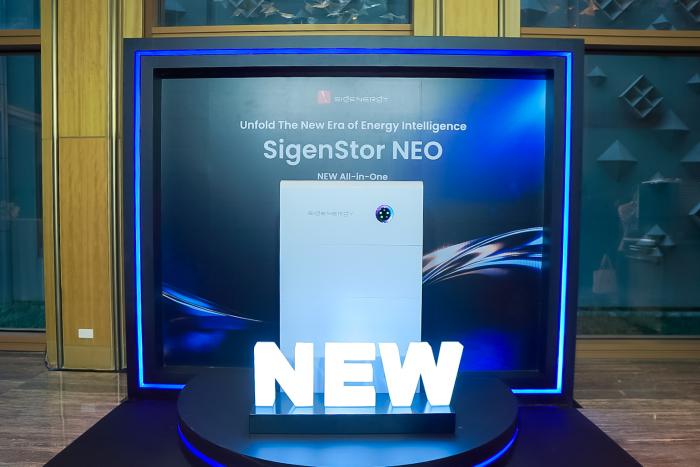
Sigenergy Launches "SigenStor NEO" in Thailand, Introducing a New All-in-One Smart Energy Solution
BANGKOK, Aug. 28, 2026 (GLOBE NEWSWIRE) -- Sigenergy continues to expand its smart energy solutions business in Thailand with the official launch of "Unfold the New Era of Energy Intelligence: SigenStor NEO" at Capella Bangkok.

Kilas Global 16 jam lalu
Huawei He Tingbo Named to TIME'S Fourth Annual List of The TIME100 AI
SHENZHEN, CHINA - Media OutReach Newswire - 28 August 2026 - TIME named He Tingbo, President of HiSilicon, Huawei's semiconductor division, to the 2026 TIME100 AI, a list recognizing the 100 most influential people in artificial intelligence.
Kilas Global 16 jam lalu
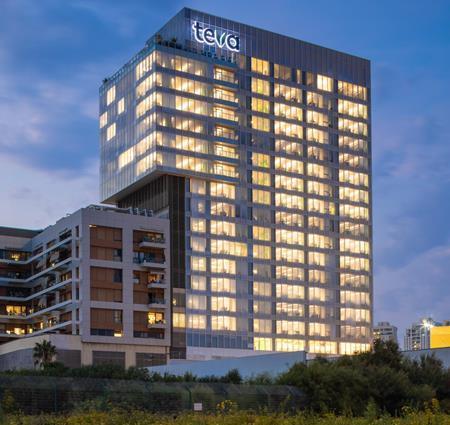
Teva Announces Proposed Acquisition of a Novel Neuroscience Product Reinforcing Disciplined Business Development Approach Under Pivot to Growth Strategy
TEL AVIV, Israel, Aug. 28, 2026 (GLOBE NEWSWIRE) -- Teva Pharmaceuticals International GmbH, a subsidiary of Teva Pharmaceutical Industries Ltd. (NYSE: and TASE: TEVA) today announced it has made a bid to acquire an innovative neuroscience product from Bi
Kilas Global 16 jam lalu
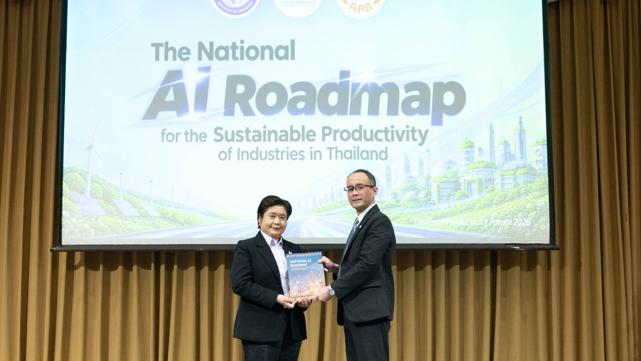
Thailand Puts Productivity at the Center of AI Transformation with National AI Roadmap
BANGKOK, Aug. 28, 2026 (GLOBE NEWSWIRE) -- Thailand today marked the official handover and dissemination of the National AI Roadmap for the Sustainable Productivity of Industries in Thailand

Kilas Global 17 jam lalu
ONE OR EIGHT Set to Ignite Southeast Asia with "Special SHOW CASE 2026 in ASIA -V8-" This October
SINGAPORE - Media OutReach Newswire - 28 August 2026 - Rising Japanese boy group ONE OR EIGHT is set to bring its rapidly growing global momentum to Southeast Asia with ONE OR EIGHT Special SHOW CASE 2026 in ASIA -V8-, a three-city showcase taking place i

Kilas Global 17 jam lalu
Aolani launches the Aolani Token Factory to bring Pay-Per-Token AI to Asia
SINGAPORE - Media OutReach Newswire - 28 August 2026 - Aolani, a Singapore-founded neocloud powering AI growth, today announced the launch of the Aolani Token Factory

Kilas Global 17 jam lalu
Experience Mid-Autumn Festival Like a Local in Hong Kong This September
HONG KONG, Aug. 28, 2026 (GLOBE NEWSWIRE) -- This September, Hong Kong invites visitors to step into the heart of Mid-Autumn Festival through a citywide celebration of light

Kilas Global 19 jam lalu
Lee Kum Kee Launches New APAC Brand Campaign "Chosen by Top Chefs"
HONG KONG, CHINA - Media OutReach Newswire - 28 August 2026 - Lee Kum Kee Sauce ("Lee Kum Kee"), the global leader in Asian sauces and condiments, announced the launch of a new integrated brand campaign, "Chosen by Top Chefs", across t
Kilas Global 19 jam lalu
Towngas and the International Gas Union to host major global energy event in Hong Kong this October
HONG KONG, Aug. 28, 2026 (GLOBE NEWSWIRE) -- A major event for the global energy sector-the International Gas Union's (IGU) 2026 Council Meeting and "Empowering a Sustainable Future"
Terpopuler
1
Kilas Global 6 hari lalu
*Happitat Celebrates Its Grand Opening, Transforming Over 200,000 Sq.m. from Land to Sky with a Record-Breaking 2,222-Drone ......
2
Kilas Global 3 hari lalu
Defiance ETFs Launches CAPA, the First U.S.-listed Capacitor & MLCC ETF
3
Kilas Global kemarin
6th Monaco Smart & Sustainable Marina Rendezvous 20 and 21 September 2026, two days focused on issues transforming marinas
4
Kilas Global 6 hari lalu
40 Teams Gather in Hong Kong to Compete in the "AI x Cybersecurity Challenge"
5
Kilas Global 6 hari lalu
Wuxi Symphony Orchestra Debuts at Ljubljana Festival: Sounds of the East Illuminate the Historic Central European City
6
Kilas Global 4 hari lalu
Hong Kong Design Summit cum BDA Brand Award 2026 Celebrates Design Excellence, AI Innovation, and Cross-Sector Collaboration
7
Kilas Global 5 hari lalu
FOREX.com launches the first overnight Japan Stock CFDs and Japan Stock CFD Knock-Out Options service
8
Kilas Global 5 hari lalu
5G Capital Sets a New Benchmark:China Unicom Beijing and Huawei Power the 2nd World Humanoid Robot Games with 5G-A GigaUplink
9
Kilas Global 4 hari lalu
Grand Challenges Canada and AVPN Launch Nexa Lighthouse to Fund Climate and Health Innovation Across Asia and the Pacific
10